
Account for Sales, Payments and Returns
Finalized Order
The shown rule debits 1006 Accounts Receivable for Order Total and credits 4001 Sales Revenue for Net Sale and 2003 Sales Tax Payable for Sales Tax. It also debits 5001 Cost of Goods Sold and credits 1003 Inventory for the sale’s recorded cost.
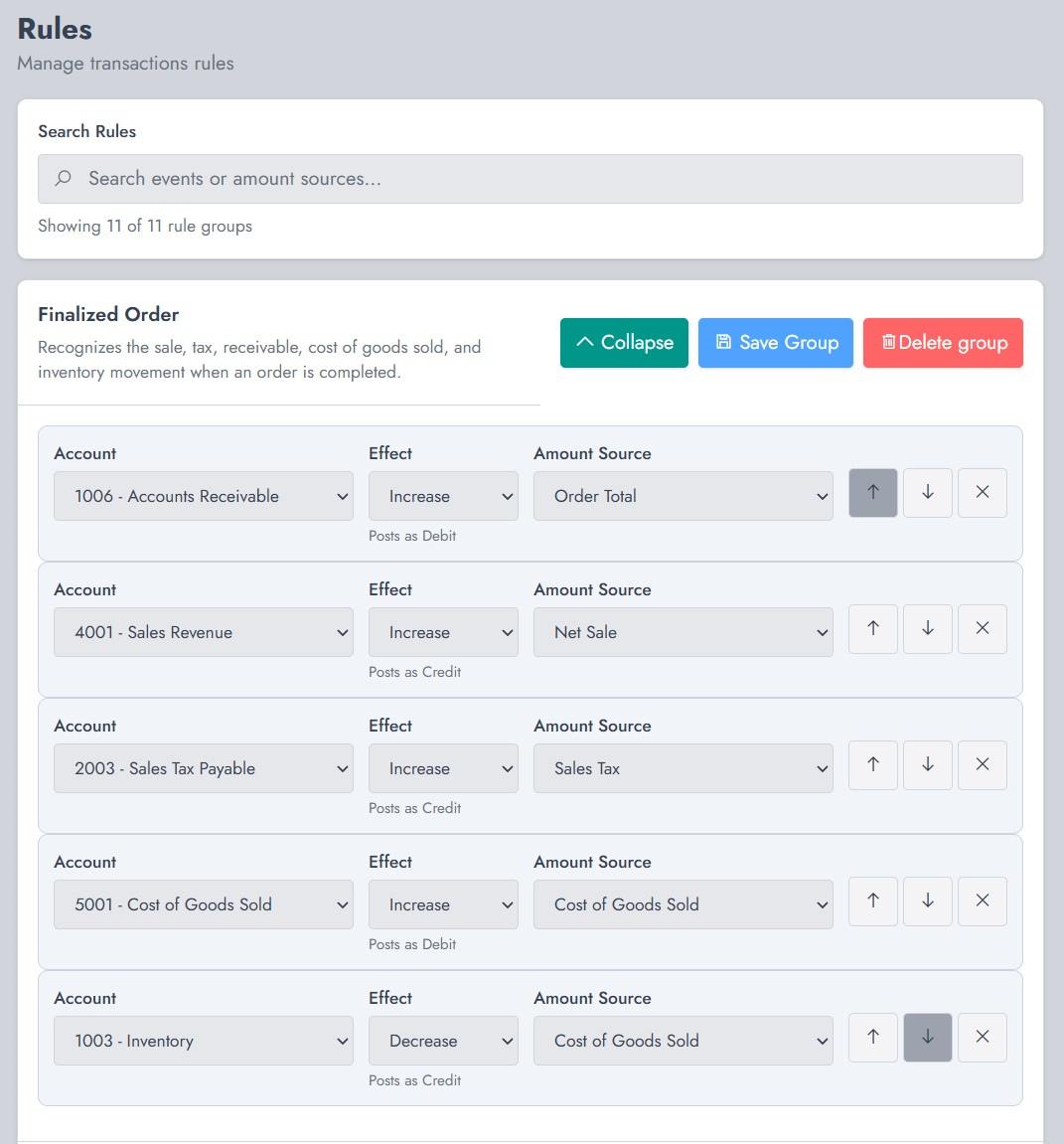
Finalized Order actions and amount sources
For an order totaling 110 including 10 tax, with goods costing 60, the journal debits Accounts Receivable 110 and Cost of Goods Sold 60. It credits Sales Revenue 100, Sales Tax Payable 10 and Inventory 60. Each side totals 170.
Order Payment
A payment debits the account resolved for the payment method and credits Accounts Receivable by the amount applied to the order. A 40 cash payment in the example debits Cash 40 and credits Accounts Receivable 40, leaving 70 due. The payment settles the receivable created by the sale. For a payment made from the customer wallet, the debit typically reduces Customer Deposits.
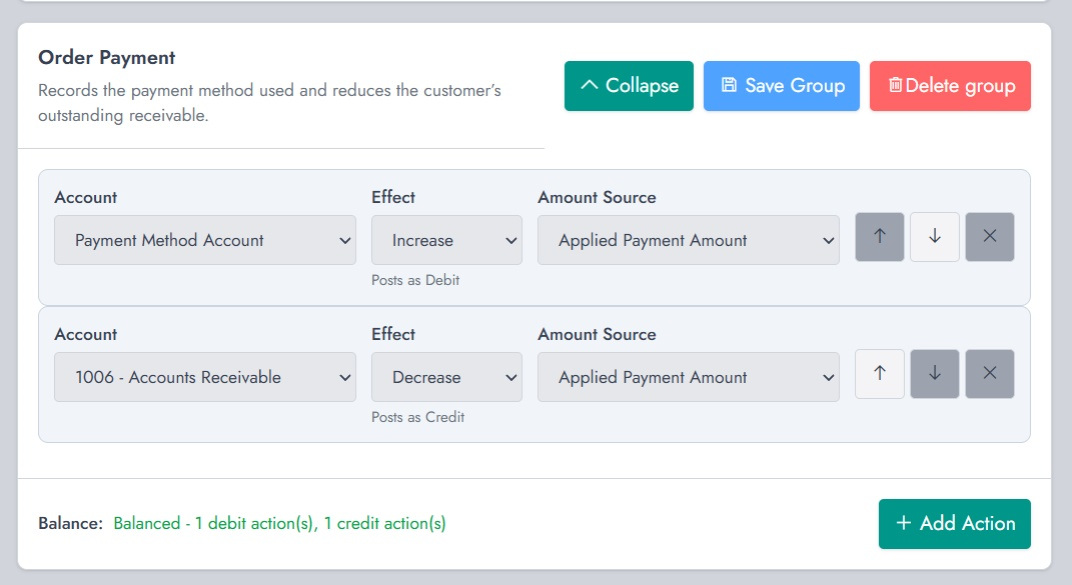
Order Payment using Applied Payment Amount on both sides
Order Refund
The shown rule debits 4002 Sales Returns / Refunds for Net Refund and 2003 Sales Tax Payable for Refunded Tax. It credits Accounts Receivable up to the outstanding balance and credits the account resolved for the refund method for the paid portion. In the example, a full 110 refund at that stage debits Returns 100 and Tax Payable 10, and credits Receivables 70 and the refund payment account 40.
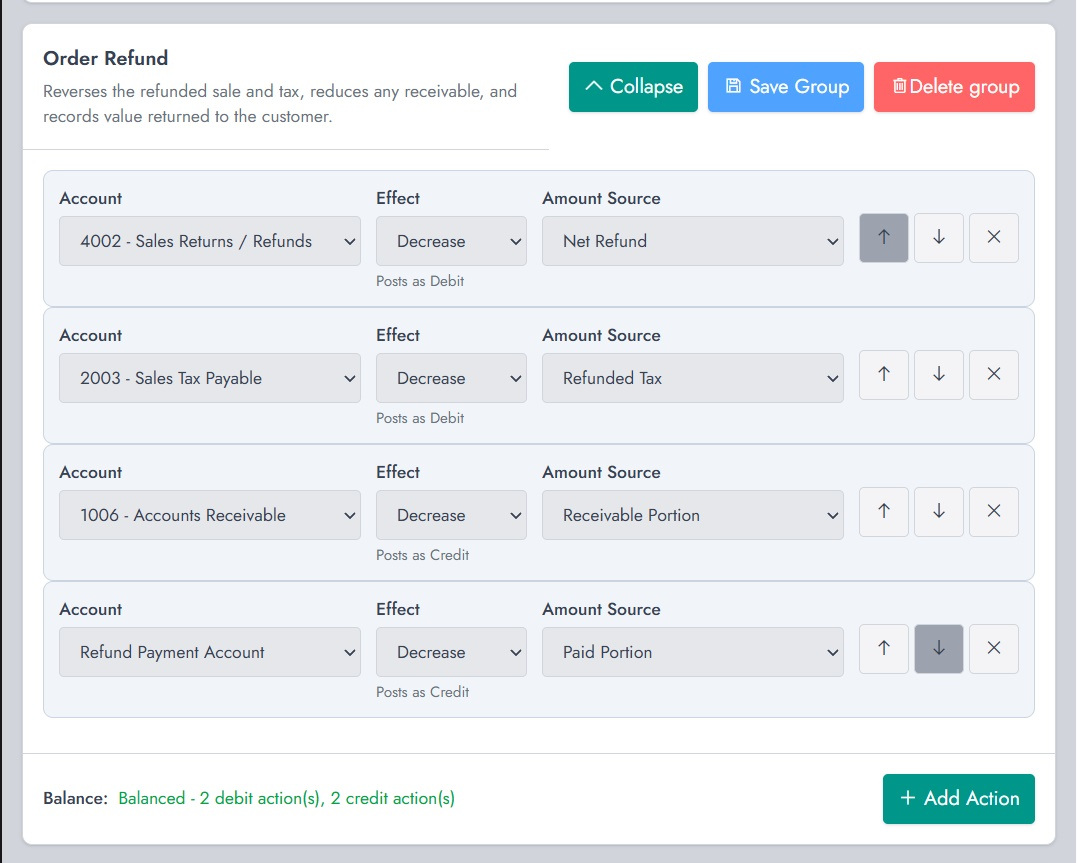
Order Refund showing the receivable and paid portions
Returned items
The condition of the returned item determines its separate cost entry. A good-condition return debits Inventory and credits Cost of Goods Sold at the original cost of the quantity returned. A damaged return debits 5106 Inventory Variance and credits Cost of Goods Sold at original cost, leaving the item out of sellable inventory.
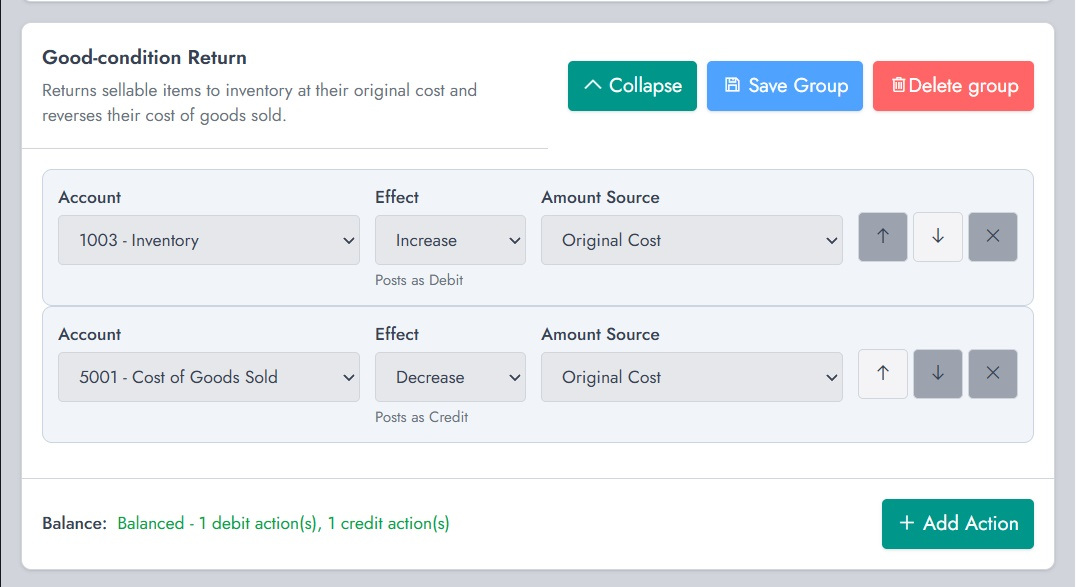
Good-condition Return restoring inventory at original cost
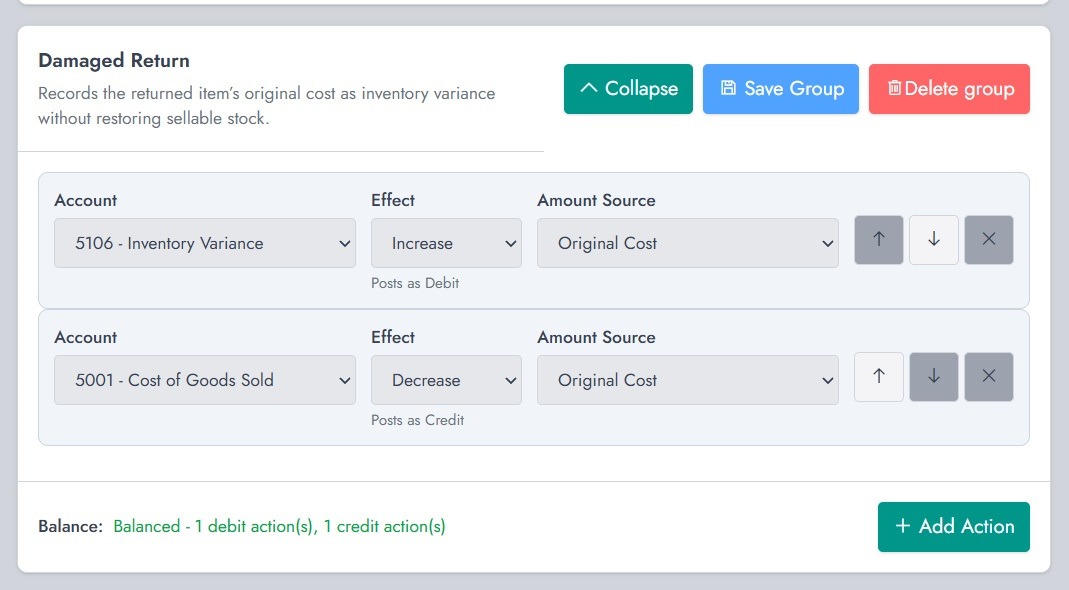
Damaged Return moving original cost to Inventory Variance