
Account for Purchases, Stock Adjustments and Wallets
Procurement Receipt and Procurement Payment
The receipt debits 1003 Inventory and credits 2002 Accounts Payable at Procurement Cost. In the shown payment rule, settlement debits Accounts Payable and credits 1007 Payment Clearing. For a 250 procurement, these entries first recognize 250 of stock and 250 owed to the supplier, then clear the payable when the procurement is posted as paid. In the reviewed 6.3.0 implementation, the payment amount source for this rule uses the procurement cost.
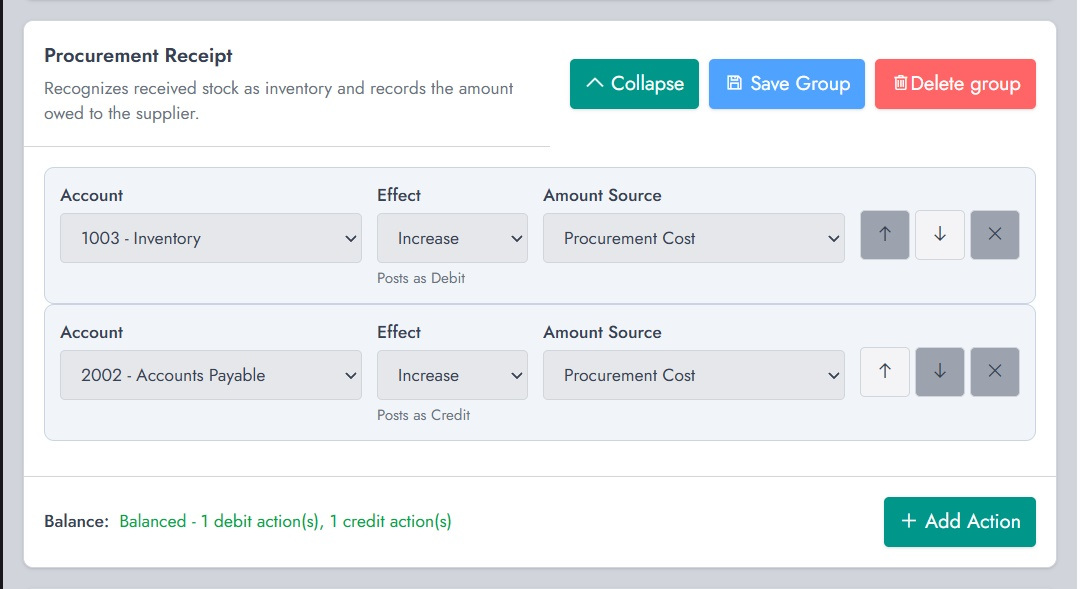
Procurement Receipt posting Inventory and Accounts Payable
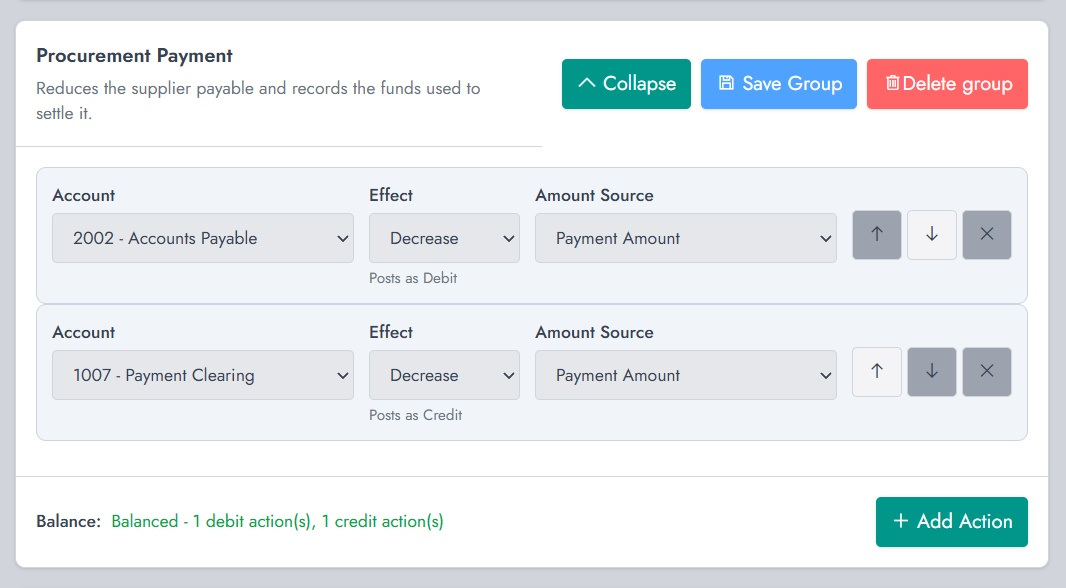
Procurement Payment reducing Accounts Payable and Payment Clearing
Negative and positive stock adjustments
A negative adjustment debits 5106 Inventory Variance and credits Inventory at Adjustment Cost. A positive adjustment debits Inventory and credits Inventory Variance at Adjustment Cost. Compare the recorded amount with the cost of the affected stock quantities and confirm the direction against the count.
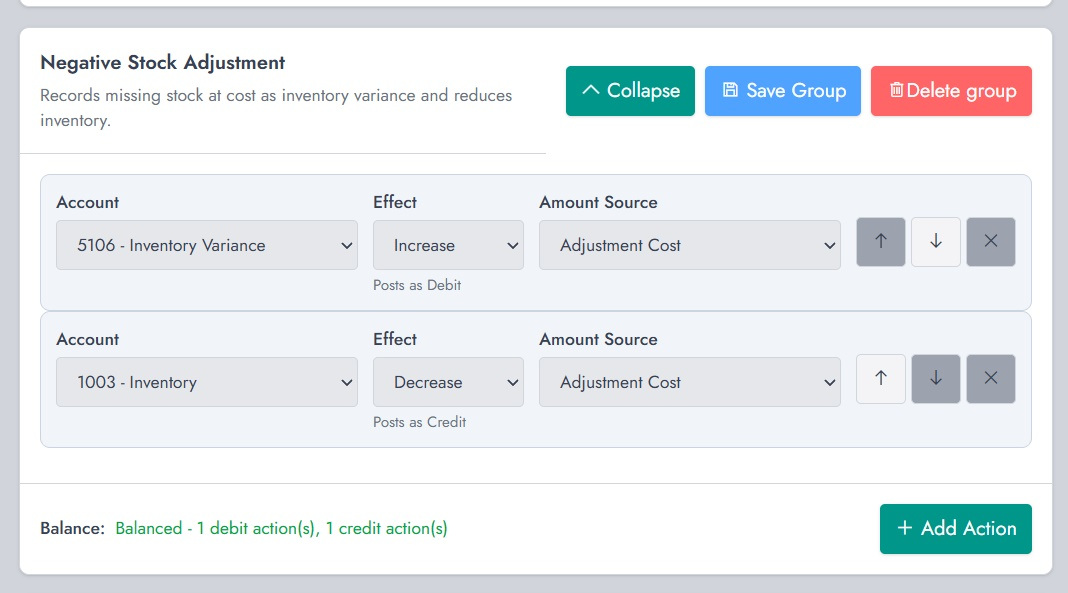
Negative Stock Adjustment recording missing stock at cost
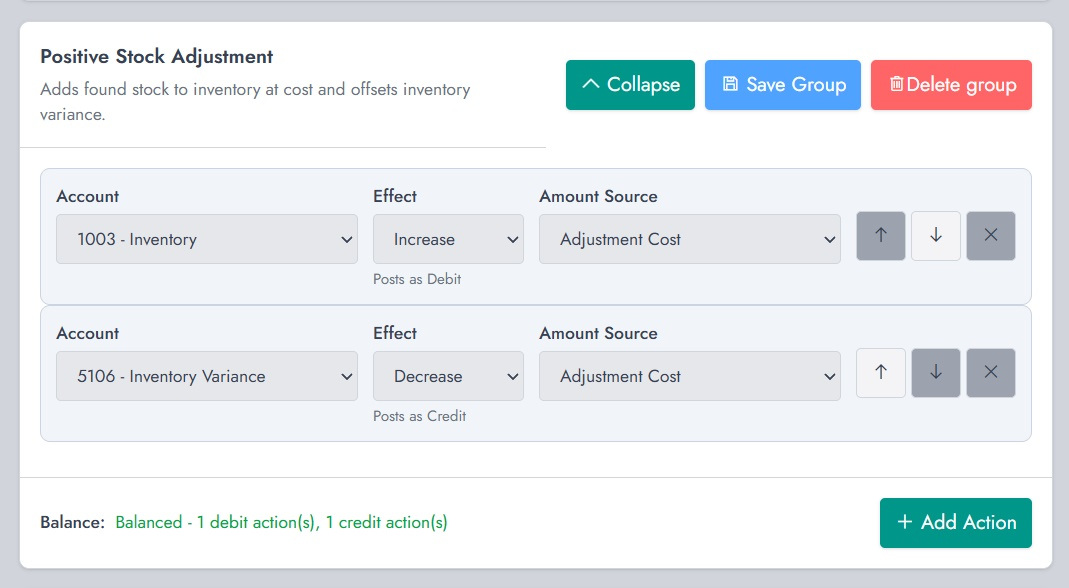
Positive Stock Adjustment recording found stock at cost
Wallet Addition and Wallet Deduction
The shown Wallet Addition rule debits Payment Clearing and credits 2004 Customer Deposits for Wallet Amount. A customer top-up increases the deposit liability. Wallet Deduction reverses those sides for standalone funds released from clearing. Purchases and refunds linked to an order can be handled by the order payment or refund rules, which use the account mapped to the wallet payment method.
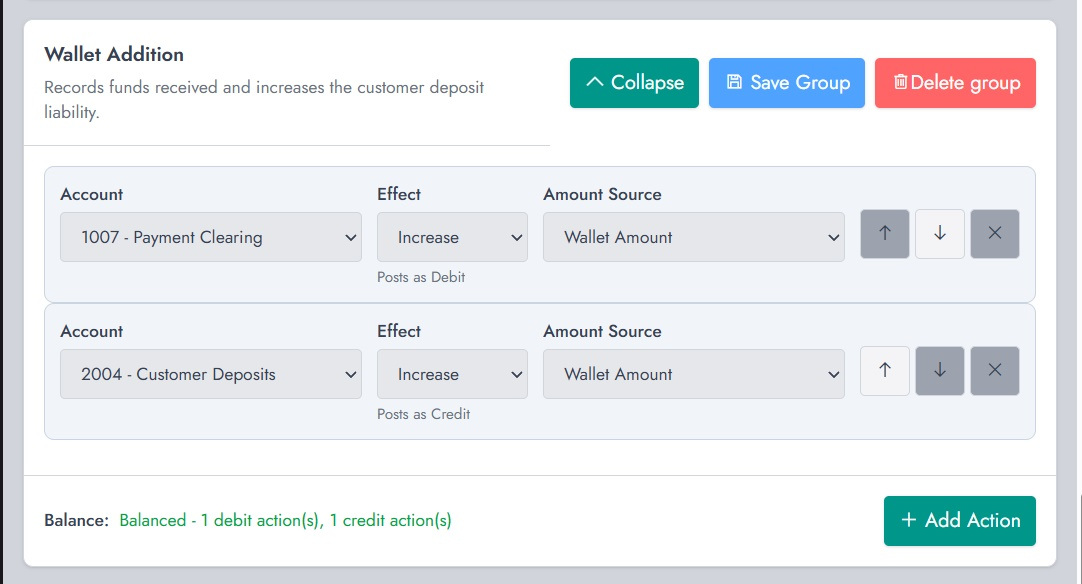
Wallet Addition increasing Customer Deposits
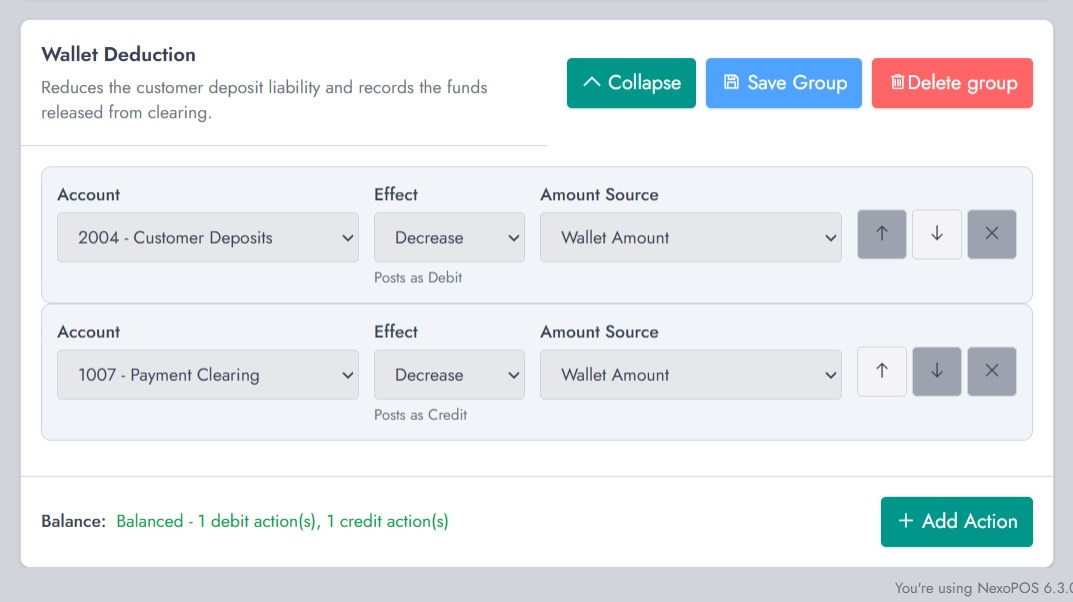
Wallet Deduction reducing Customer Deposits